
Car maintenance is about more than an annual oil change and a quick check of the tires. The key things to watch vary depending on whether the vehicle is powered by an internal combustion engine, electricity, or a hybrid system—and sometimes in ways that are counterintuitive. Comparing these differences helps you focus on what really matters and avoid unnecessary expenses.
Internal combustion vs. electric: the practical differences
An internal combustion engine requires a maintenance schedule focused on fluids and mechanical wear parts. An electric powertrain eliminates some of these requirements but introduces others. The table below compares the main maintenance items.
| Maintenance item | Internal combustion vehicle | Electric vehicle |
|---|---|---|
| Engine oil change | Every 15,000 to 30,000 km, depending on the manufacturer | Not applicable |
| Brake pads | Frequent replacement (typical mechanical wear) | Reduced wear thanks to regenerative braking |
| Coolant | Regular checks, periodic replacement | Used to cool the battery; replacement intervals are often longer |
| Timing belt | Must be replaced at the specified mileage | Not present |
| High-voltage battery | Not applicable | Periodic diagnostics; thermal management should be monitored |
| Tires | Standard wear | Wear can be accelerated by instant torque |
Regenerative braking in electric and hybrid vehicles significantly reduces brake pad wear. On the other hand, tires wear out faster on an electric vehicle because of the high torque available from a standstill. Many drivers only discover this expense later on.
For more in-depth information and regularly updated articles, Breizheo’s car advice covers both conventional powertrains and new onboard technologies.
Everyday car safety: checks that make a difference
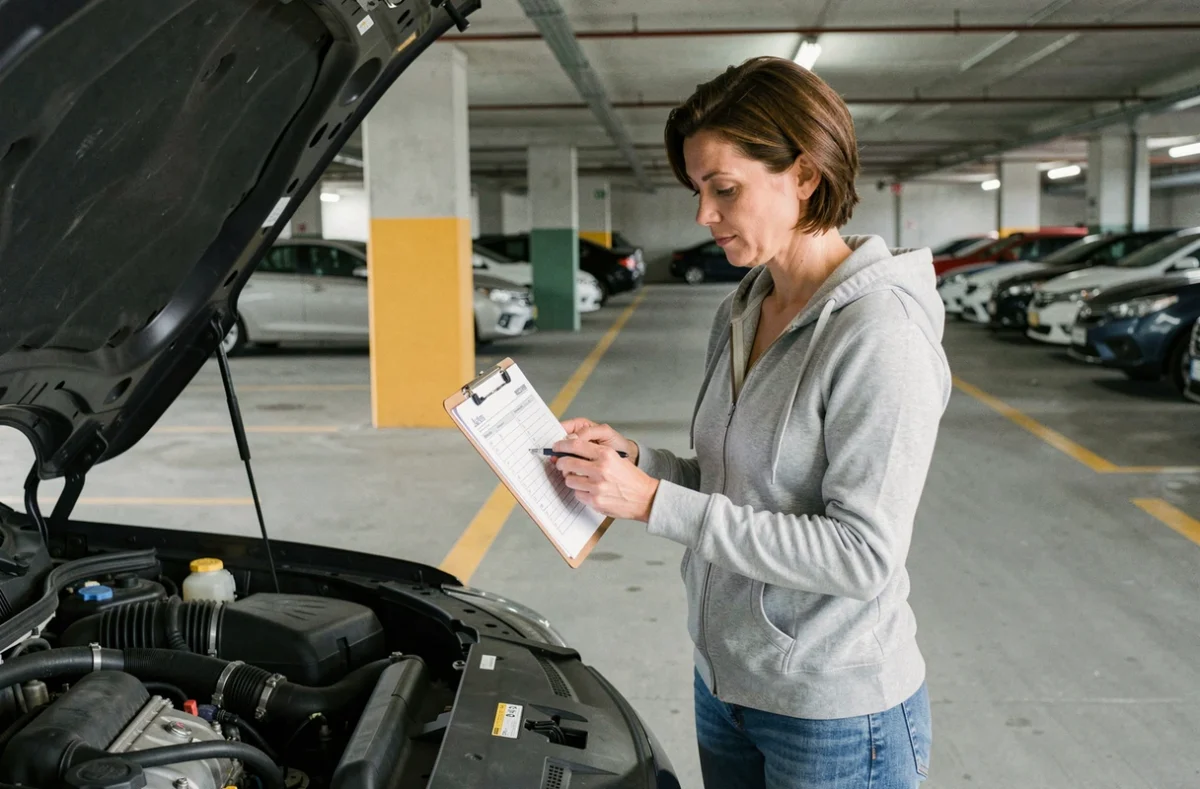
Safety relies on simple checks that you can carry out without any special equipment. Three deserve particular attention because they are often overlooked.
- Tire pressure: an underinflated tire increases braking distance and fuel consumption. In an electric vehicle, it also measurably reduces range. Check the pressure when the tires are cold, at least once a month.
- All lights: testing the low beams, turn signals, brake lights, and fog lights takes less than two minutes. Drivers often fail to notice a burned-out bulb, but other road users don’t.
- Brake fluid level: this fluid absorbs moisture over time, which reduces its performance. In hybrids, the hydraulic system remains active even when regenerative braking does most of the work in everyday driving.
These checks don’t replace the legally required roadworthiness test, but they can help you spot a problem between garage visits.
Hybrid vehicles: specific maintenance pitfalls
Hybrids combine two powertrains, creating some unique maintenance situations. For example, the combustion engine in a plug-in hybrid may remain inactive for long periods if the driver mainly uses electric mode.
This limited use of the combustion engine creates a practical problem: engine oil ages even when no miles are driven. It oxidizes and loses its lubricating properties. Following the oil-change interval in months, not just mileage, is therefore more important than it is for a conventional vehicle.
The exhaust system is affected by the same issue. Without regular warm-up cycles, condensation builds up and accelerates corrosion. Driving occasionally on a trip long enough for the combustion engine to reach its operating temperature helps limit this risk.
The particulate filter in a plug-in hybrid regenerates less often than in a vehicle used exclusively with a combustion engine, which can lead to premature clogging. Some manufacturers include a forced regeneration cycle, but not all make it clear to the driver when this happens.
Tips for worry-free driving: simple habits, measurable benefits
Beyond mechanical maintenance, a few driving and organizational habits can reduce stress and costs.
Anticipating stops instead of braking at the last moment helps preserve brake pads in an internal combustion vehicle and increase energy recovery in an electric or hybrid vehicle. Smooth driving can significantly extend an electric vehicle’s range compared with aggressive driving.
Keeping a maintenance log, even a digital one, with the dates and mileage for each service helps prevent missed maintenance. It can also be an asset when selling the vehicle: a complete service history reassures buyers and can justify a higher price.

Long-term parking also deserves attention. A 12 V battery drains faster in a vehicle packed with electronics. In electric models, the high-voltage battery normally powers the 12 V battery, but during a long period of inactivity, the overall charge level can fall below a critical threshold. Plugging in the vehicle or using a battery maintainer can prevent an unpleasant surprise when you try to start it again.
Tailor your maintenance habits to your powertrain, regularly check a few key safety items, and adopt an anticipatory driving style: these three steps are enough to cover most everyday situations. The rest is best left to a professional during the service appointments scheduled by the manufacturer.