
Baby care equipment is only one part of getting ready. Before the birth, several medical decisions can affect your newborn’s health from the very first weeks, and they need to be made well before delivery day. Here are the key points to consider so you can welcome your baby in the best possible conditions.
RSV prevention and vaccination during pregnancy: decisions to make before birth
RSV bronchiolitis remains a common cause of hospitalisation in infants. In France, two preventive strategies are available: maternal vaccination during pregnancy or preventive treatment given directly to the baby after birth.
The choice between these two approaches depends on your due date, the season your baby is expected to be born and the mother’s medical history. This is not a decision to make on your own: discuss it with your gynaecologist or midwife, ideally during the third trimester.
Flu vaccination is also recommended for pregnant women. The French National Health Insurance Fund recommends it during pregnancy because it helps protect babies during their first weeks of life, when they are not yet old enough to be vaccinated themselves. This recommendation also applies to the close contacts of vulnerable newborns, an aspect often overlooked in traditional preparation guides.
We recommend discussing these topics at your seventh-month appointment, while there is still time to adjust your prenatal vaccination schedule. Check the current recommendations with your healthcare professional, as they may change from one season to the next.
Newborn sleep space: safety standards and choosing a mattress
A wide range of reference guides and specialist shops such as bebebonheur.fr make it easy to compare sleep products that meet current requirements. The main thing to pay attention to is the mattress.
A firm, breathable mattress that fits the bed perfectly is essential. There should be no gaps between the edge of the mattress and the bed frame, whether you choose a bassinet, cot or bedside crib.

Do not use cot bumpers during your baby’s first year. French safe-sleep recommendations are clear: the cot should contain nothing but the baby, a sleep sack and a fitted sheet.
Room temperature directly affects your baby’s sleep quality and ability to regulate their body temperature. The ideal range is 18 to 20 °C. If the air is dry, you can add a humidifier.
Cot, bassinet or bedside crib
A cot is the most durable option and can be used until your child is two or three years old. A bassinet is suitable for the first few months because it takes up less space. A bedside crib makes night-time breastfeeding easier, provided it is approved for use and securely attached to the parents’ bed with no gap.
Whichever model you choose, check that it complies with the current standard and assemble it several weeks before your due date to make sure it is stable.
Baby care and hygiene kit: what you need and what you don’t
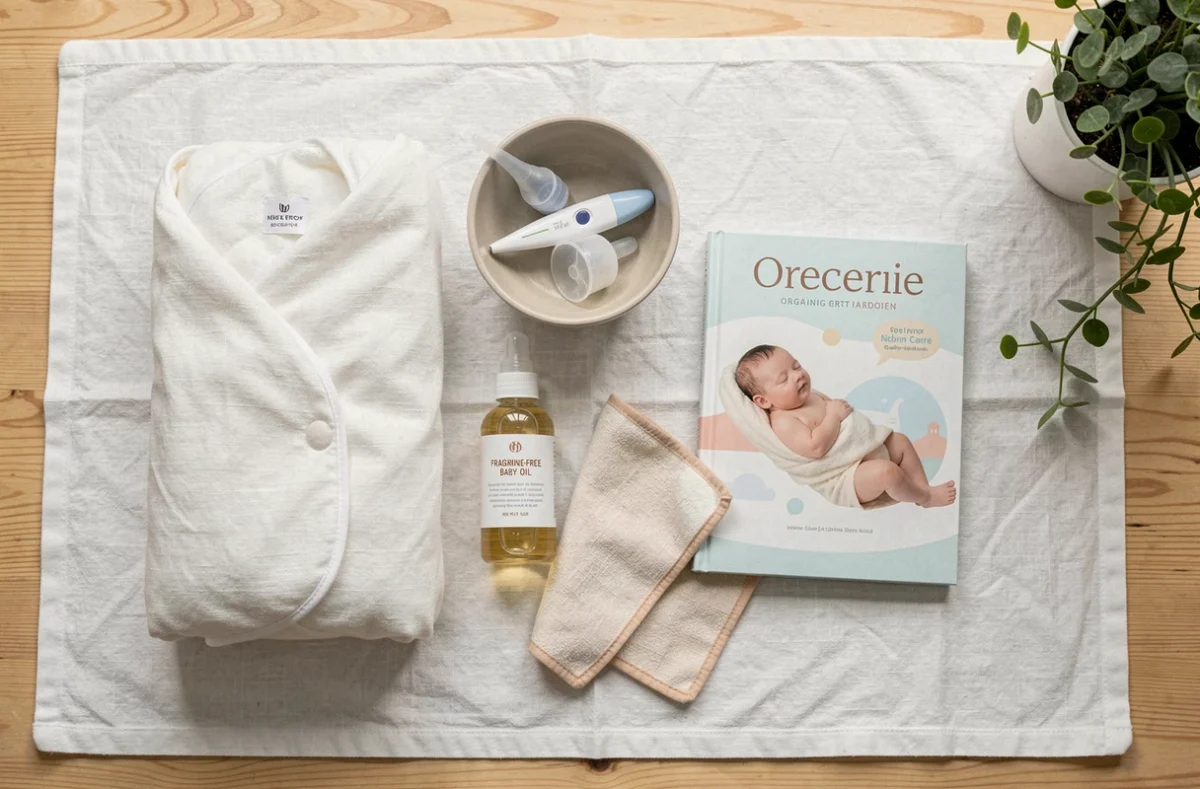
Online baby registries often include dozens of products. In practice, a newborn care kit only needs a handful of items that you will actually use from your time in the maternity ward.
- Single-use saline solution pods for cleaning your baby’s nose and eyes, used daily during the first few weeks.
- A reliable rectal thermometer (rectal readings remain the standard for infants), ready for when you bring your baby home.
- Sterile gauze pads and an antiseptic suitable for umbilical cord care, following the maternity ward’s instructions.
- A zinc oxide nappy cream to help prevent nappy rash.
- A soap-free cleansing bar or fragrance-free wash, which is all you need to bathe your newborn.
Perfumed cosmetics, massage oils and multiple lotions are not recommended for newborn skin, as its protective barrier is still immature.
Newborn clothes and bedding: realistic quantities for the first few weeks
Six to eight bodysuits and the same number of sleepsuits in newborn size are enough for the first few days, as long as you can do laundry every other day. Newborn size generally fits babies weighing less than four kilos.
- Wrap-over bodysuits (easier to put on a tiny baby than an American-style neckline).
- Cotton sleepsuits with a full-length front opening to make night-time changes easier.
- Lightweight hats for the maternity ward and outings, even in warm weather, as newborns have difficulty regulating their temperature.
- Season-appropriate sleep sacks, with at least two so you have a spare in case of spit-up.
It is easy to overbuy baby clothes and bedding. Babies grow quickly, so it is better to buy only the essentials in newborn size and add one-month sizes as needed, depending on your baby’s growth.
Breastfeeding or bottle-feeding: prepare the right equipment for your choice
If you plan to breastfeed, you will only need nursing pads, a suitable nursing bra and, if you expect to return to work soon, possibly a breast pump. Reusable nursing pads help reduce waste over time.
For bottle-feeding, we recommend having at least six bottles and a set of newborn teats. A steriliser is not essential if you wash bottles thoroughly with washing-up liquid and rinse them carefully after each use.
Choose infant formula in consultation with your paediatrician or midwife. Buying just one tin before the birth lets you check how your baby tolerates it without building up an unnecessary stock.
Follow-up resources for after you get home
As well as practical equipment, the French 1000 First Days portal offers resources on sleep, breastfeeding and infant development. This official source complements routine medical care and answers many of the questions that come up after leaving the maternity ward.
The most effective preparation combines medical decisions made early enough, a limited selection of equipment that meets safety standards, and reliable resources for the weeks after the birth. Everything else can wait.