In 1910, some fashion designers introduced high waistlines and a gradual abandonment of the rigid corset for the first time, while other houses continued to defend the hourglass silhouette. The first creations from major houses showcased fabrics from abroad and ornaments inspired by Asian or Oriental motifs. The differences in styles between Paris, London, and Vienna widened, while artistic exchanges disrupted established hierarchies. Some ateliers set new standards, while others clung to centuries-old traditions.
Why 1910 Marks a Turning Point in Fashion History
1910 refuses to march in step. Fashion strives to break away from a fixed notion of beauty. Paris continues to set the tempo, but already, a desire for emancipation is brewing. Cuts become more relaxed, and dresses shorten. The movement for the liberation of the female body gains ground and profoundly reshuffles the cards of style across Europe. Women claim new spaces, sometimes in the secrecy of salons, sometimes on the boulevards. Men, for their part, gently accompany this change, sometimes against the grain, always seeking a balance between classic elegance and the pulse of modern city life.
This moment is not limited to choices of fabrics. Open your eyes: accessories speak, cuts overflow with boldness. Fabrics lose their rigidity, details become significant, and belts shout modernity. Paris accelerates the pace: the Faubourg Saint-Honoré shakes up the rules of chic while working-class neighborhoods embrace new inspirations. Among the exciting resources, the evolution of fashion in 1910 perfectly illustrates these upheavals.
Since then, this decade has relentlessly inspired today’s creators. Vintage fashion draws from this source, sometimes celebrating retro taste, sometimes revisiting the antique spirit. In every era, 1910 returns like a compass, a witness to all social, technical, and aesthetic changes. It’s hard to imagine today’s passion for re-editions without this precedent.
To grasp the strength of this revolution, one only needs to detail the cuts and stylistic boldness of the time. Every centimeter of fabric seems to have a story to tell.
Haute Couture and Visionary Designers: What Influences Shaped the Styles of the Time?
In Paris, haute couture takes power; the term is not too strong. Charles-Frédéric Worth embodies the transition: the designer becomes a central figure, imposing his vision on society. His house attracts crowned heads, wealthy heiresses, a whole world in search of elegance and refinement. Boldness and attention to detail make the difference.
Quickly, the game expands. Couture houses see new names emerge, eager to shake up the routine. Paul Poiret, an unclassifiable pioneer, decides to free women from the corset. He introduces the high waist, fabrics inspired by the East, and brings a fresh breath to clothing. But Poiret does not stop at textile creation: he thinks about the overall look, from perfume to accessories, shaking up the industry with the energy of a time hungry for novelty.
The decade is experienced as a giant laboratory: creation is enriched by encounters with painters, architects, and decorative artists. Each collection asserts itself, daring new combinations, marrying influences and materials. Through these experiments, haute couture becomes a permanent testing ground. Inspiration draws from all the arts, boundaries blur, and clothing stands as a manifesto. This effervescence resonates even in the pages of fashion history of the century.
From Iconic Silhouettes to Innovative Materials: What Sets 1910 Fashion Apart
The woman of 1910 stands out at first glance with her famous S silhouette. With a pronounced curve, an elegant posture, and shoulders back, the Belle Époque look continues to evolve. Corsets soften, lines become straighter, and a new breath captures wardrobes. Amid the fibers, the liberation of the female body is vividly outlined.
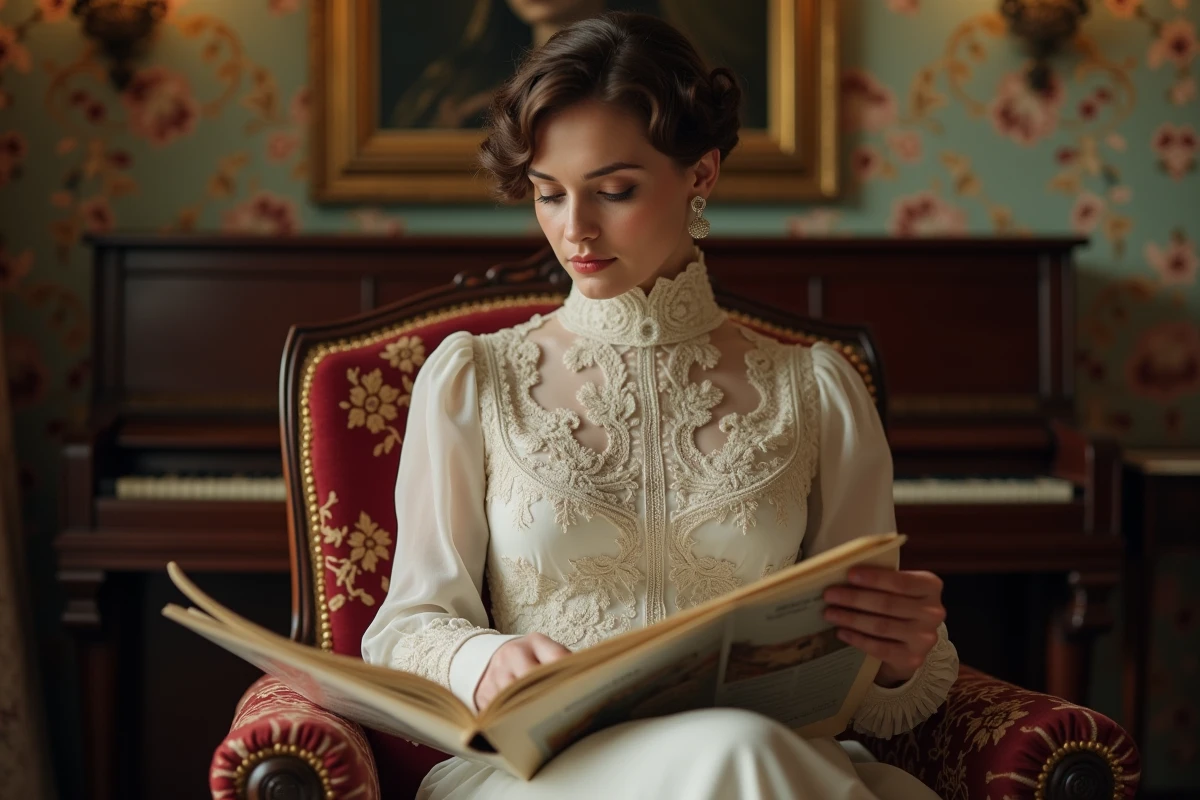
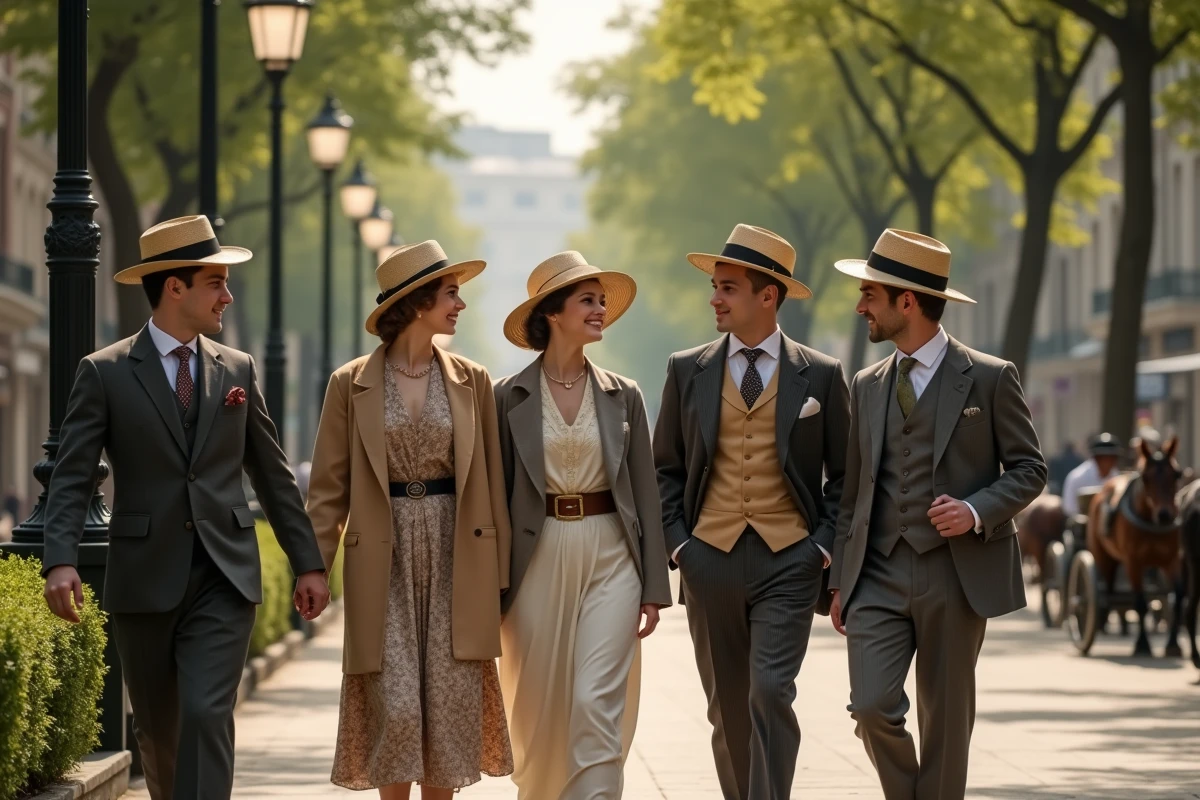
Another revolution: the grand celebration of fabrics. This period favors mobile and delicate textiles. Airy muslin, shimmering silk, subtle tulle, but also cotton for everyday life: everything begins to transform. Accessories rise to the level of visual signatures. The cloche hat makes its mark, jewelry becomes visible, and bags and shoes become standalone pieces.
To give a clearer idea of the wardrobe of the time, the following characteristics are regularly found:
- The high-waisted dress clearly takes precedence, paired with three-quarter sleeves and long skirts that brush the floor.
- The color palette flourishes: pastels, ivory, embroidery, and floral patterns appear on both daywear and ball gowns.
- Decorative fabrics still dominate urban silhouettes, affirming distinction and social rank.
Meanwhile, the men’s wardrobe maintains its seriousness: fitted three-piece suits, durable fabrics, tailored accessories, from pocket watches to boater hats. 1910 embodies this balance between the rigor of tradition and the breath of novelty. It’s impossible to walk the streets today without finding, in some avant-garde shop windows, the vibrant echo of this pivotal era.