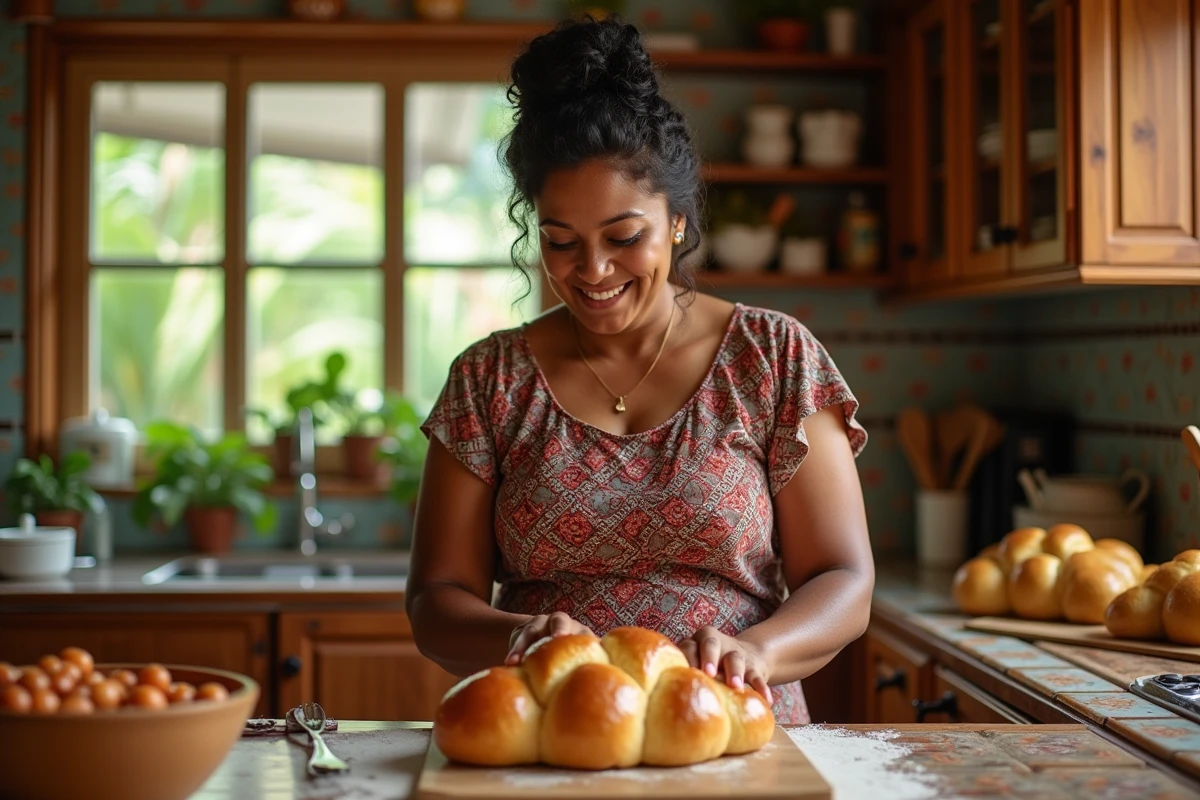
No major family celebration in the Caribbean takes place without the presence of the butter bread, often reserved for special occasions. Despite its name, this specialty does not correspond to the brioche breads found in mainland France and is distinguished by its texture and method of preparation.
While many recipes claim authenticity, the Martinican version imposes specific steps, inherited from colonial practices and adapted over generations. The lesser-known regional variations testify to a discreet creativity and a strong family transmission.
Why does Martinican butter bread embody Caribbean conviviality?
There, Martinican butter bread reigns supreme on festive tables. At Christmas, during major religious ceremonies or family events, it occupies the center of the celebration. Its soft sweetness evokes Creole generosity, while its presence connects parents, children, and friends, from Fort-de-France to Pointe-à-Pitre, in an atmosphere of mutual aid and sharing. Preparing this bread is a way to reconnect with a heritage shaped by history, cultural exchanges, and gestures passed down quietly, generation after generation.
More than just a sweet treat, it signifies a collective spirit. The family gathers around the large mixing bowl: flour-dusted hands, advice from elders, shared laughter. The making of it then becomes a true ritual. Offering this bread at an event is, in a way, a proud reminder that here, solidarity and transmission are not empty words. This bond is reflected in every little indentation shaped in the dough, in every piece handed out, throughout celebrations and shared memories. The tradition persists, vibrant, far beyond the simple pleasure of tasting.
An entire part of the history of Antillean butter bread continues to be passed down through gesture, taste, and gathering, cementing each family around strong values and a powerful attachment to their homeland.
Secrets of making: between authenticity and family tips
Creating a true butter bread requires patience and know-how. Even though the ingredients are well-known—flour, eggs, butter, sugar, milk, and yeast—everything hinges on the attention given to the dough: it must be kneaded for a long time, the right texture felt under the hands, every step monitored, and resting times respected. Allowing the dough to rest overnight is not trivial: it is the secret to a subtle aroma and a soft crumb.
Key steps and tools
To give you a concrete idea of the process, here is an overview of the essential actions that ensure the success of this classic Antillean pastry:
- Kneading, always done by hand or with a whisk, to tame the texture of the dough without rushing it.
- Braided shapes, in crowns or spirals: each signifies the identity of a household.
- Egg wash, a necessary step to achieve that irresistible golden crust.
- Baking preferably on parchment paper to preserve the tenderness of the bread.
Tips circulate discreetly: citrus zest to flavor the dough, a milk/water mix for a lighter texture, precise yeast management. Some enrich the recipe with coconut, chocolate, or a hint of cinnamon. Others reinvent the tradition: gluten-free alternatives or vegan versions are gaining ground, without betraying the spirit of butter bread. Each household, each mother, claims their secret detail, beautifully illustrating a culinary richness woven from diversity.
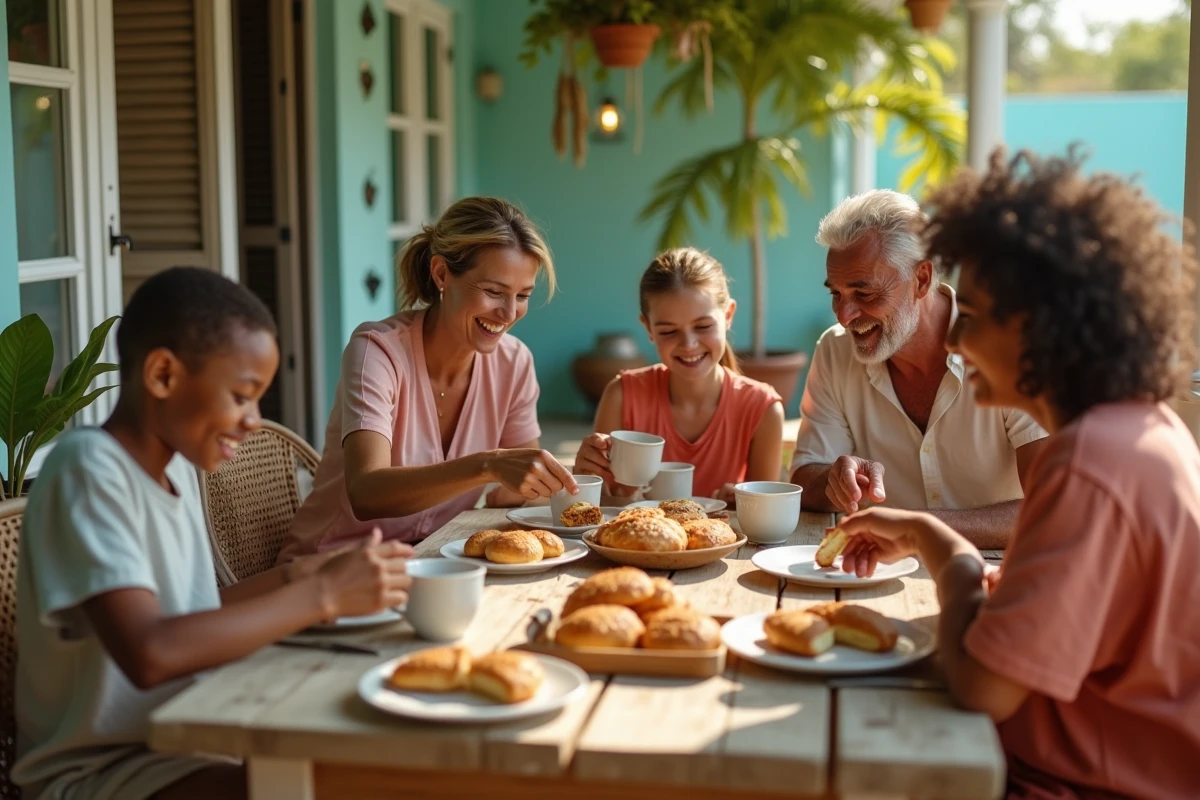
The joy of sharing: Tasting, reinventing, transmitting
As soon as it comes out of the oven, it is devoured with the eyes. Golden bread, warm crumb, it awaits only the celebration: baptisms, weddings, communions, all the major milestones of Caribbean life adore it. It is ideally enjoyed warm, accompanied by a bowl of Martinican chocolate, guava jam, a drizzle of honey, or even a simple local cheese. These delicious pairings vary by family and give butter bread a palette of flavors in constant evolution.
It is impossible to tour Caribbean tables without mentioning the variations: some fill it with a hint of pastry cream, grated coconut, or citrus zest. At the markets of Martinique and Guadeloupe, these breads proudly display themselves, handmade, symbols of the bond between generations.
In recent years, the recipe has been making its way onto social media. Images of golden brioche, festive memories, tips shared in videos: everything circulates, exchanges, adapts. The butter bread hashtag collects a thousand likes and comments, and its authors extend, through these virtual shares, a living heritage. This digital excitement resonates with tradition well beyond the islands’ borders. A continuous celebration, where each generation finds its place in front of a piece of brioche, real or shared online.
With each warm slice, every memory resurfaces, extending the living chain of stories, kneaded many times and never quite told the same way.