The relationship between well-being and contact with nature is increasingly attracting the attention of public authorities and the medical community in France. Several local governments are now experimenting with nature prescriptions, while the European Commission recognizes access to green spaces as a key health determinant. These developments are changing the way we can measure the concrete impact of the link between the natural environment and physical or mental health.
Nature Prescription and European Strategy: Two Frameworks to Compare
Two parallel dynamics currently structure the institutional approach to well-being related to nature. One is local and experimental, while the other is regulatory and continental. Their logics, scales, and indicators differ.
| Criterion | Nature Prescription (France) | Health-Environment Strategy (EU) |
|---|---|---|
| Origin | Municipal and hospital experiments since 2022 | Communication from the European Commission, April 2024 |
| Scope | Targeted patients (stress, anxiety, burnout) | General population, urban planning |
| Form | Forest stays, therapeutic gardens, guided walks | Indicators of access to parks, green corridors, street trees |
| Pilot cities / framework | Strasbourg, Grenoble, Île-de-France | National health-environment plans 2025-2030 |
| Evaluation | Qualitative feedback from doctors (reduction in perceived stress) | Accessibility indicators for green spaces to be integrated by member states |
The progress report from the Fabrique Spinoza published in October 2024 documents the positive feedback from doctors involved in the French experiments. In contrast, the European strategy is positioned upstream: it sets a framework for each member state to integrate nature into its public health policies, without yet having consolidated data at the continental level.
Several French-speaking resources are closely following these developments. Notably, about L’Esprit Nature features regular publications that intersect environmental news and daily well-being practices.

Forest Stays and Therapeutic Gardens: What French Experiments Measure
The nature prescription programs tested in Strasbourg, Grenoble, and Île-de-France share a common point: they target patients already being treated for anxiety disorders or professional burnout. The doctor prescribes an activity in a natural setting, supervised by a healthcare professional or a sports educator.
The formats vary by region:
- Forest stays last several days and combine slow walking, breathing exercises, and sensory observation of the environment.
- Therapeutic gardens, often associated with hospital facilities, offer weekly adapted gardening sessions, with regular medical follow-up.
- Guided walks in peri-urban areas allow patients living in cities to access green spaces without long travel, reducing logistical barriers.
The Fabrique Spinoza report notes that doctors observe a reduction in perceived stress among participating patients. This evaluation remains qualitative: it relies on the feelings of practitioners and patients, not yet on standardized biological measures.
This methodological limitation does not disqualify the results. It indicates that France is at an exploratory stage, comparable to what Canada experienced with the Prescri-Nature program before structuring a more rigorous follow-up.
Access to Green Spaces in Cities: The Planning Challenge Behind Well-Being
The April 2024 communication from the European Commission changes the perspective. Nature is no longer a therapeutic complement prescribed on a case-by-case basis: it becomes a public health determinant linked to urban planning.
Member states are encouraged to include indicators of access to nature in their national health-environment plans for the period 2025-2030. In practical terms, this means measuring the quality and accessibility of parks, the presence of green corridors connecting neighborhoods, and the density of street trees.
Quality of Green Spaces vs. Simple Area
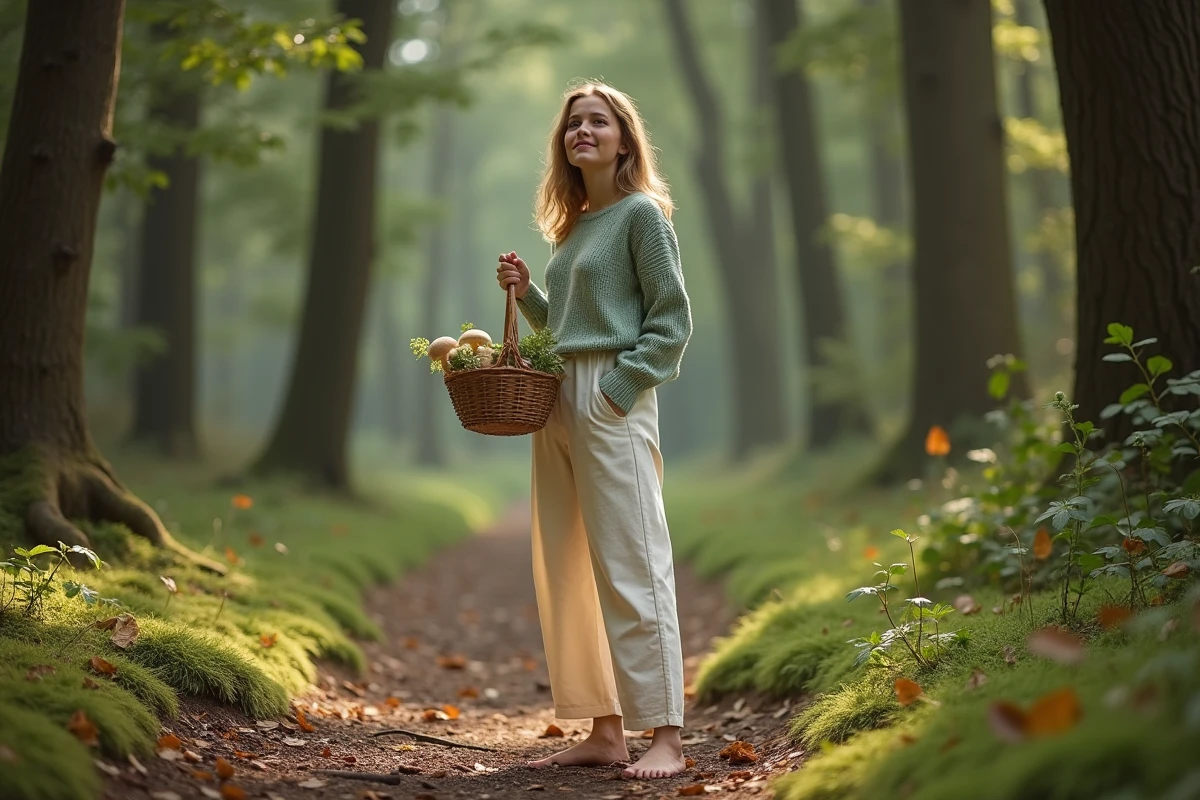
A paved park with a few mowed lawns does not produce the same effects as a space integrating native habitats and diverse vegetation. The Foundation for Research on Biodiversity emphasizes the goal of integrating at least a significant share of native habitats into managed landscapes, in accordance with the global biodiversity framework adopted in Montreal.
This distinction between the quantity and quality of green spaces is rarely addressed in public well-being advice. Outdoor yoga in a biodiversity-rich park and yoga on a synthetic lawn bordered by roads do not engage the same sensory channels.
Water, Body, and Environment: Nature Well-Being Practices Gaining Ground in France
Beyond medical prescriptions, several practices for connecting with nature are developing across France, driven by a growing demand for health-focused retreats.
Outdoor yoga, rural fasting retreats, and natural water thalassotherapy stays attract an audience seeking a bodily experience situated in a specific place, not just a simple exercise reproducible indoors. Water, the body, and the immediate environment form a triptych that these practices exploit in a complementary manner.
Parcs Canada has documented for several years the benefits of physical activity in natural settings on overall health, with accessible programs that combine hiking, wildlife observation, and environmental education. In France, similar initiatives are emerging in regional natural parks, where guided stays combine moderate physical effort and sensory immersion.
The difference between generic well-being advice and a practice rooted in a specific natural environment comes down to a simple parameter: the location determines the experience as much as the activity itself. A walk in a forest of centenary beech trees does not evoke the same perceptions as a coastal trail, even at the same physical intensity.
The coming years will tell whether the French nature prescription structures itself sufficiently to produce solid data, and whether the European indicators of access to green spaces truly change urban planning. The regulatory framework exists. Local experiments do too. The missing link remains the systematic measurement of their effects on the health of the populations concerned.