When a real estate listing mentions “5-room house” or “T5”, it refers to a dwelling composed of five main rooms. This designation does not include the closed kitchen, the bathroom, or the toilets. Understanding this convention avoids many misunderstandings when searching for a family home.
What the tax authorities consider as a main room
The confusion often arises from the gap between everyday language and the administrative definition. You might call your laundry room or heated pantry a “room.” However, the tax administration does not count them.
The BOFiP doctrine, updated in 2023, specifies that only rooms intended for living or sleeping are counted as main rooms. For a room to be counted, it must meet three simultaneous conditions: be intended for residential use (sleeping, living), have sufficient ceiling height, and have autonomous use. Laundry rooms, pantries, technical rooms, and hallways are excluded, even if heated.
To delve deeper into the definition of a 5-room house, this administrative distinction remains the starting point to master before any search or declaration.
This classification is still used today for calculating the housing tax on secondary residences and the tax on vacant housing (THLV). Declaring one room too many or too few directly alters the tax base.
Typical composition of a T5 house and common layout
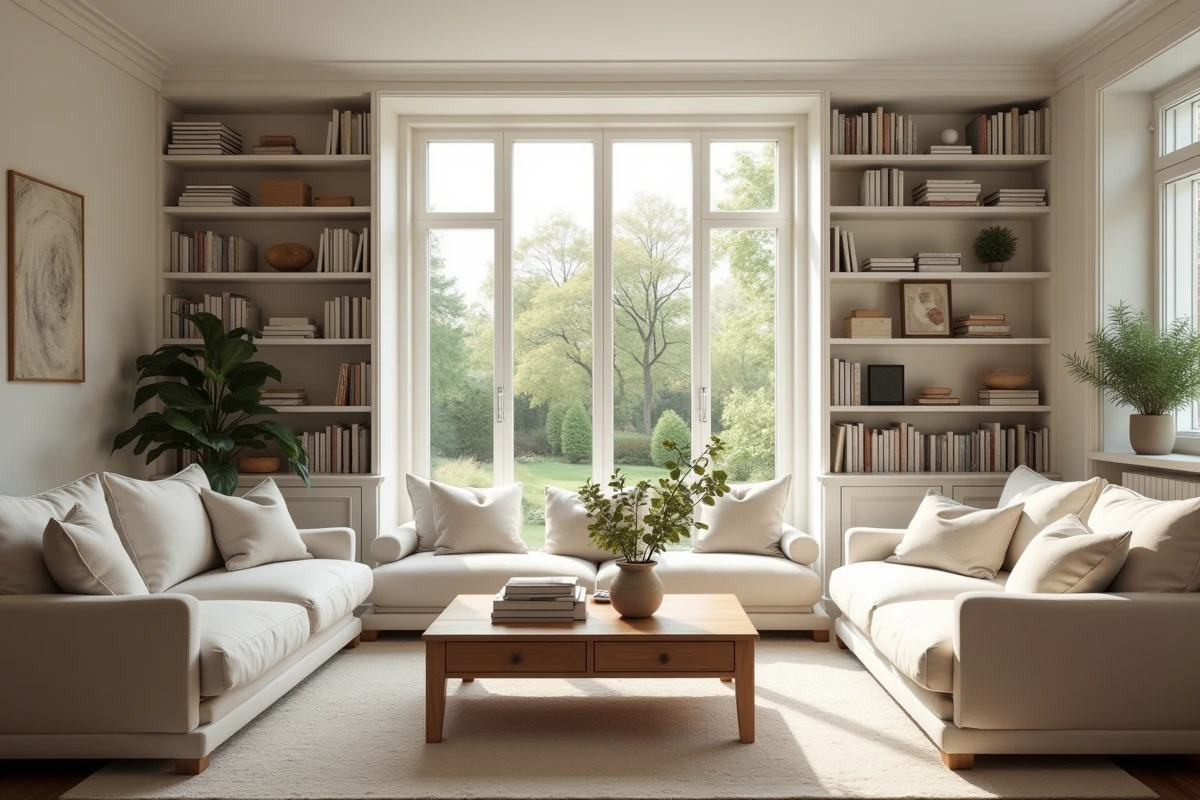
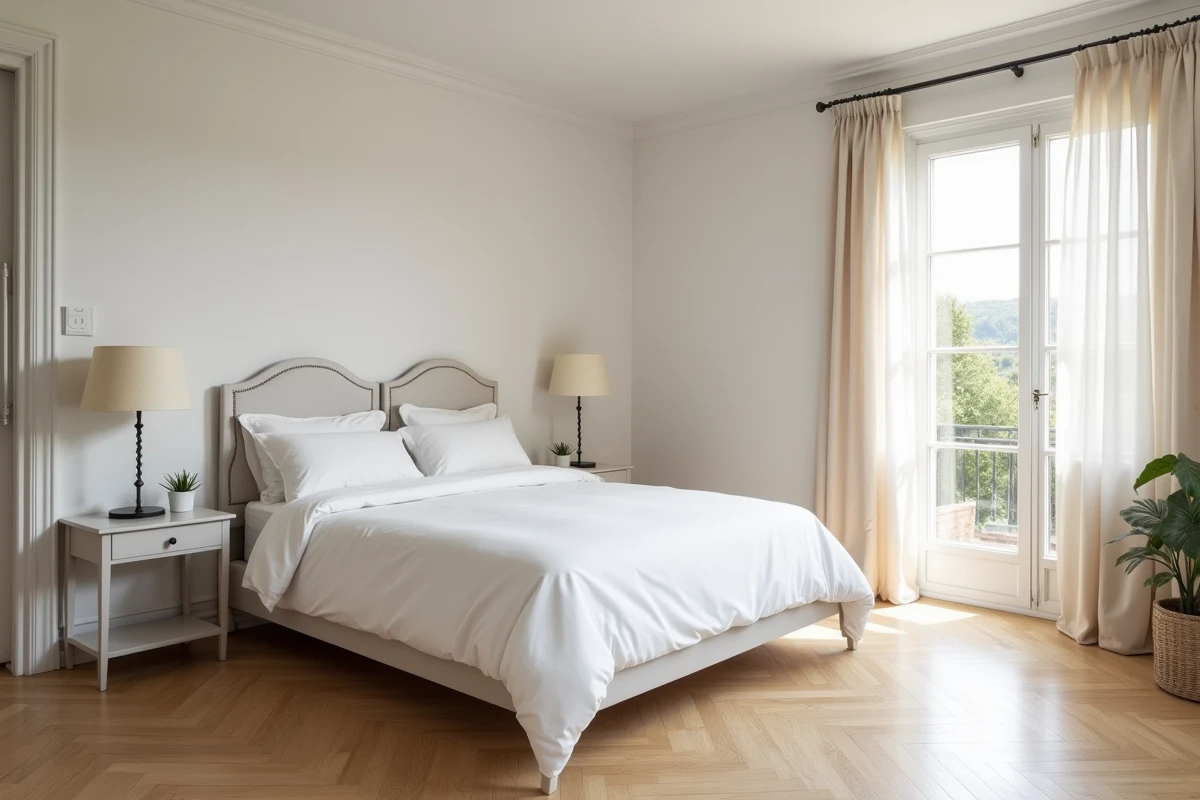
A 5-room house most often consists of a living room, a dining room (sometimes open to the living room), three bedrooms, and, in some configurations, an office in place of the third bedroom. The kitchen, bathroom, and toilets are added without being included in the count.
Have you ever noticed that two “5-room” houses can offer very different sizes? That’s normal. The number of rooms says nothing about the total area of the dwelling. A T5 in the city center can be less than 90 m², while a T5 in the countryside often exceeds this area significantly.
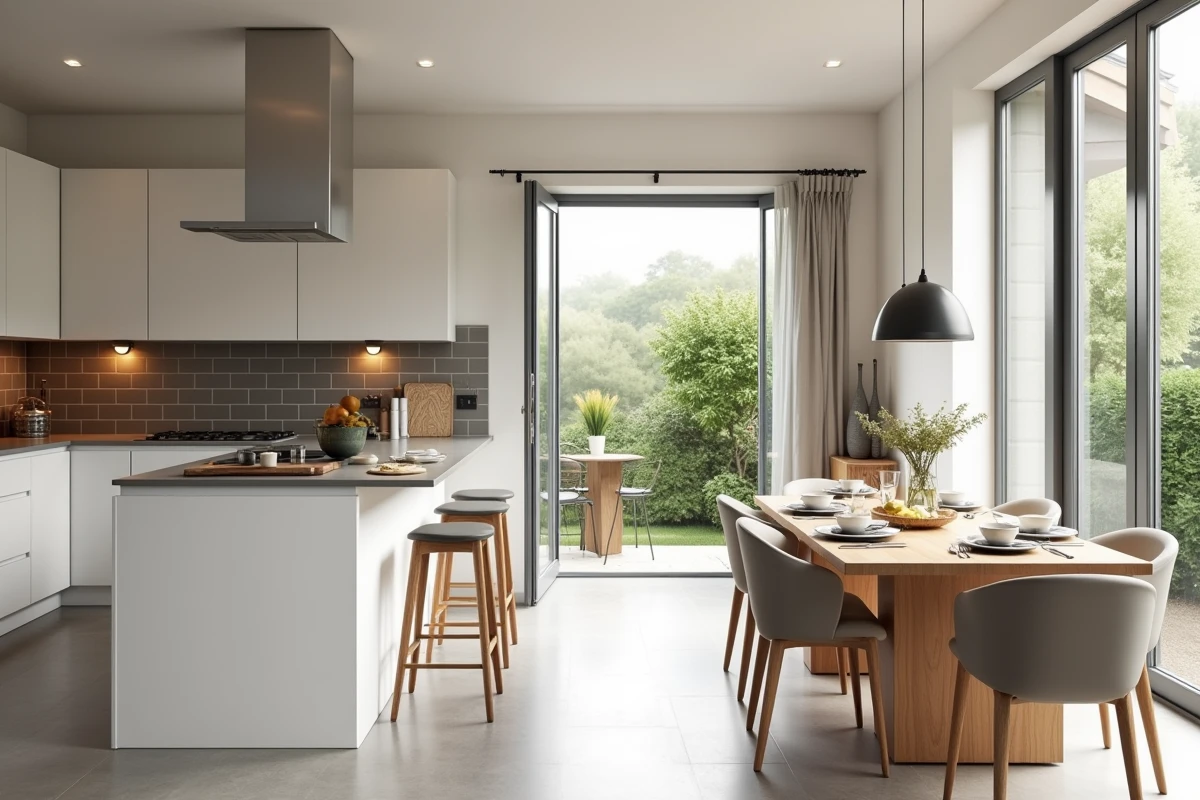
The most functional layout separates day spaces (living room, dining room, kitchen) from night spaces (bedrooms). In a two-story house, the ground floor hosts communal living, while the upper floor contains the bedrooms. On a single level, a hallway or landing ensures this separation.
- The living room is the largest living space, often facing south or west to maximize natural light
- Bedrooms require a minimum area of about 9 m² to be counted as main rooms
- An office can replace a bedroom in the count, provided it is actually used as a living space and not just for storage
- The dining room, when open to the living room, counts as one room in the administrative sense
This last point regularly traps buyers. An open living-dining room counts as one room, not two. A house listed as T5 with a large open living space thus has four other distinct rooms, typically three bedrooms and an office.
Energy performance and value of a 5-room house
The energy label increasingly influences the valuation of family homes. According to observations from the Higher Council of Notaries, T5 houses suffer a greater depreciation than smaller homes when they display an energy class of F or G.
The reason is mechanical: the larger the area, the higher the cost of energy renovation. A buyer of a T5 rated F anticipates insulation work, boiler replacement, or even a complete overhaul of the heating system. This budget directly impacts the price they are willing to pay.
Since 2024, the price gap between a T5 rated D and one rated B has widened significantly. For smaller homes (T1 or T2), this gap remains more moderate. The heated area of a 5-room house thus amplifies the financial impact of the energy performance diagnosis.
Progressive rental restrictions for energy-intensive housing exacerbate this phenomenon. A landlord considering renting out their T5 house must ensure that the energy class remains compatible with the current regulatory thresholds. A family home rated G will no longer be available for rent in the coming years, further reducing its market value.
Stone, wood, or newly built T5 house: what impact on the count
The construction material (stone, wood, concrete block) does not change the count of rooms. A stone longhouse with five main rooms remains a T5, just like a recent wooden pavilion.
However, the type of construction influences the interior layout. Older stone houses, common in the countryside, often feature rooms in a row. Connecting rooms without doors or partitions can be reclassified as a single room during an evaluation. A house listed as T5 could then strictly be a T4.
- In an old stone house, check that each room has independent access or a physical separation
- Recent wooden constructions generally comply with partitioning standards from the design stage
- Renovated country houses deserve special attention: opening work between rooms may have reduced the official number of main rooms
Before a purchase, always request the cadastral description of the property. This document lists the rooms recognized by the administration and their designation. It serves as the reference for local taxation and avoids any surprises after signing.
The 5-room house remains the preferred format for families with children, offering a balance between communal spaces and privacy. The count of rooms, energy class, and interior distribution are the three criteria to examine as a priority, well before the area displayed in the listing.