
On a construction site or in a regular DIY workshop, the reliability of Ryobi tools often comes up in discussions. We explored the topic starting from concrete use cases to move beyond vague opinions.
Ryobi Brushless Motors: What It Really Changes in Use
When tackling a series of drillings in hardwood or trimming a hedge of hornbeam with thick branches, the type of motor makes a difference. Ryobi has been generalizing brushless motors on its key tools for a few years now: hammer drills, saws, hedge trimmers.
A brushless motor reduces internal friction, resulting in less heat, extended battery life, and superior mechanical longevity. On a brushless ONE+ 18 V hammer drill, you can clearly feel the difference compared to older carbon models: the torque is better maintained when the battery drops below half its charge.
For those who regularly work with hard materials, this is a real selection criterion. Feedback varies on longevity beyond three or four years of intensive use, but for a DIYer who uses their tools several times a month, Ryobi’s brushless technology stands up to the competition in the mid-range.
There are also reviews and performance of the Ryobi brand that confirm this technical upgrade in the latest generations of tools.

ONE+ 18 V Platform: Battery Compatibility and Real Equipment Cost
The real economic argument for Ryobi is not found in the price of an isolated tool. It is calculated across the entire fleet. The ONE+ system is based on a simple principle: one 18 V battery compatible with over 200 tools, from the garden to the workshop, with backward compatibility between generations of Lithium+ batteries.
In practical terms, once you own two batteries and a charger, each additional tool can be purchased in a “bare tool” version (without battery). The hedge trimmer, jigsaw, or blower then costs significantly less than their equivalents sold with a battery included.
What This Means for a Starter Kit
The first purchase remains the most expensive, as you need to acquire the batteries. A combo kit (drill-driver + two batteries + charger) is the logical entry point. From there, each additional tool in the ONE+ ecosystem can be added at a lower cost.
- A bare hedge trimmer costs around a hundred euros, compared to double that with batteries and charger included
- The 5 Ah batteries provide enough autonomy to mow about 350 m² and continue with a trimmer without recharging
- Backward compatibility avoids having to buy new batteries when Ryobi releases a new generation of tools
This unique platform model represents a concrete advantage over brands that fragment their ranges into several incompatible voltages.
Ryobi Warranty and Customer Service in France: What to Expect
A reliable tool is also one that is covered when it breaks. In France, ONE+ 18 V tools are guaranteed for 3 years provided the product is registered. This duration places Ryobi at the level of mid-range standards, comparable to what Bosch (green range) or Einhell offer.
User feedback on verified review platforms is generally positive. The points that come up regularly include: good value for money, ease of use, battery compatibility. Criticisms mainly concern the availability of spare parts for older models and the processing time of customer service in some cases.
Spare Parts: A Point to Check Before Purchase
This is the Achilles’ heel of several mass-market brands, and Ryobi is not entirely exempt. For a tool five or six years old, finding a spring, housing, or transmission part can require patience. One user reported easily getting the rear flap spring of their hybrid mower replaced, but this type of responsiveness is not systematic according to feedback.
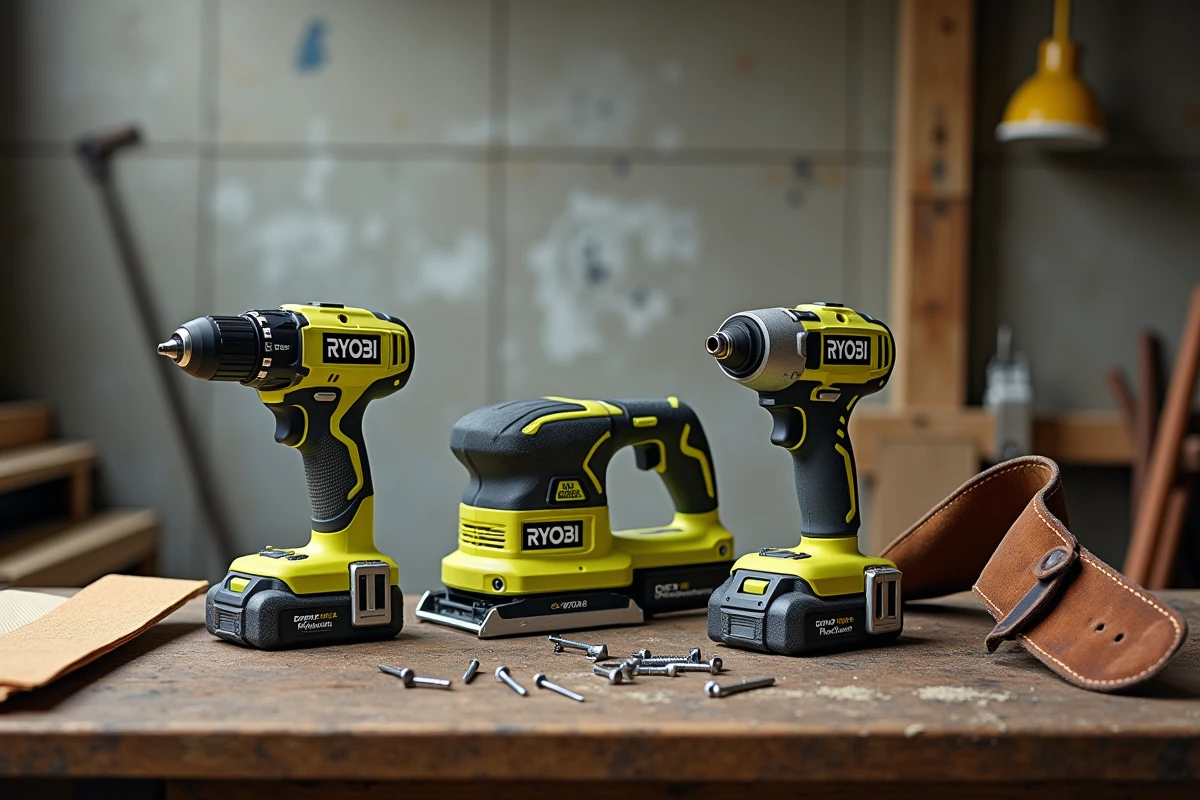
Ryobi Against the Competition: Price Positioning and Technical Limits
Ryobi does not play in the same league as Milwaukee or Makita on professional job sites. The brand belongs to the same group (Techtronic Industries, based in Hong Kong), which also owns Milwaukee. Ryobi’s positioning targets the regular DIYer, not the tradesman.
This role-sharing within the group explains design choices: slightly lower torque on drills, plastic housings instead of metal on some models, ergonomics designed for sessions of a few hours rather than for daily job site use.
- For furniture assembly, light renovation, or garden maintenance, the power and endurance are sufficient
- For drilling reinforced concrete all day or cutting rafters, the limits become apparent quickly
- The recent brushless ranges reduce the technical gap with the mid-range professional tools, without completely closing it
The calculation is therefore based on the intensity of use. A DIYer who pulls out their drill two or three times a week will find a reliable tool at a controlled cost with Ryobi. A construction professional will need to upgrade.
Ryobi occupies a specific niche: that of the DIYer who wants a coherent ecosystem without multiplying battery formats, with steadily improving manufacturing quality in the latest generations. The 3-year warranty and the ONE+ platform are its two strongest arguments. An occasional user does not have the same requirements as a tradesman who uses their tools eight hours a day, and it is this distinction that guides the right purchase.