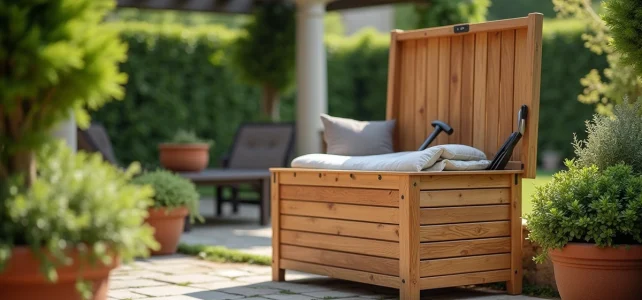
Choosing an outdoor storage box for the garden often involves balancing capacity, resistance to weather conditions, and floor space. Resin, wood, metal, hybrid bench-box models: options have multiplied in recent years, and performance differences between materials are not always clear in product specifications. This article compares the main categories of outdoor boxes based on the criteria that matter most in daily use.
Outdoor storage box: resin, wood, or metal in the field
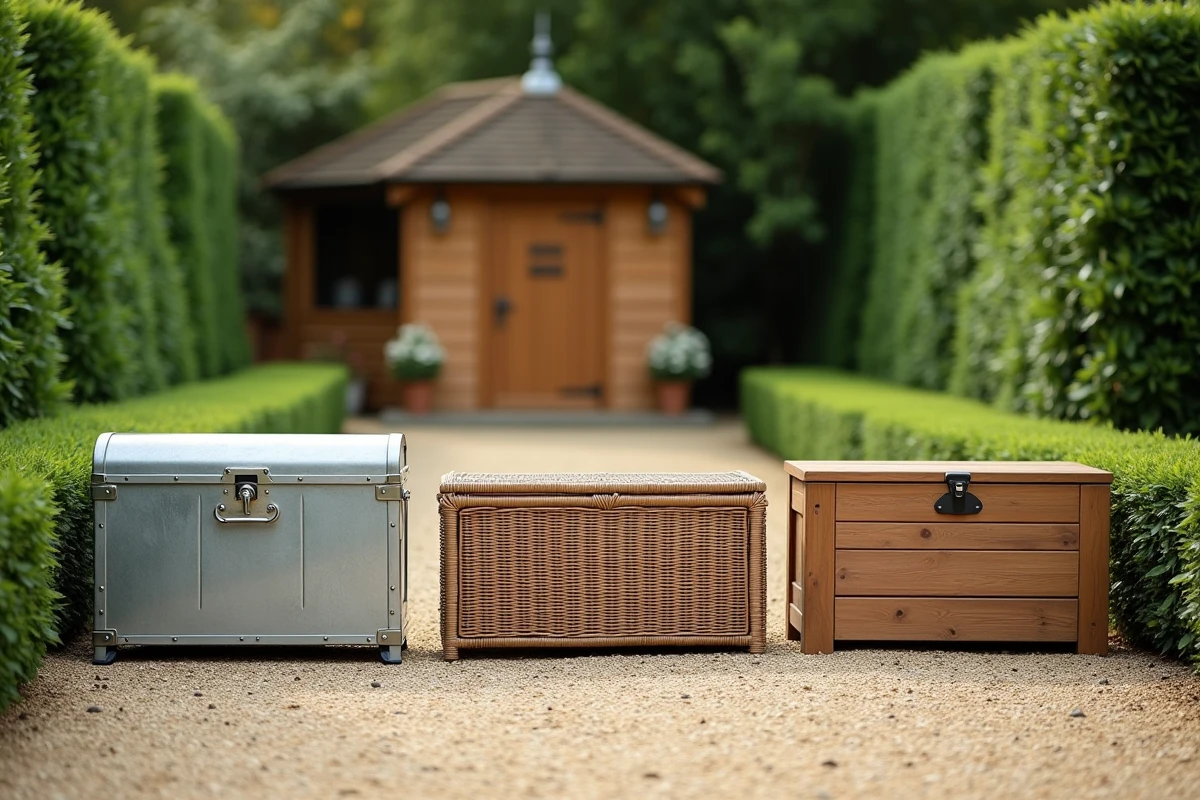
Online comparisons generally pit resin against wood, sometimes against metal, without detailing what each material entails over time. The table below summarizes the concrete differences in use.
Read also : Discover the best beauty tips, care, and trends to enhance your daily life
| Criterion | Woven or molded resin | Wood (pine, acacia, teak) | Metal (galvanized steel, aluminum) |
|---|---|---|---|
| Moisture resistance | High (no absorption) | Variable (autoclave treatment necessary) | Good if treated against corrosion |
| Annual maintenance | Simple cleaning with a jet | Stain or oil every 1 to 2 years | Check for rust spots |
| Weight | Light to medium | Heavy | Medium to heavy |
| Aesthetic over time | Stable (no graying) | Natural graying if untreated | Stable if paint is intact |
| Recyclability | Limited (composite plastic) | Good (natural material) | Excellent |
Resin dominates the outdoor box market because it combines lightness and water resistance without recurring maintenance. In contrast, wood remains the only material that develops a patina instead of aging, provided regular maintenance is accepted.
Metal, less common in mainstream garden boxes, is more suitable for storing heavy tools or around pools where structural strength is paramount. Its main drawback: internal condensation, which can damage cushions or textiles stored inside.
Read also : Optimize Your Online Studies: The Best Platforms for Accessing Quality Educational Resources
To compare prices and available references at retail, Brico Dépôt outdoor storage boxes cover a wide range, from entry-level resin to treated wood.
Waterproofing of the outdoor box: what “weather-resistant” really means
Several brands now position their boxes as “waterproof” rather than simply “weather-resistant.” The distinction has a direct impact on what you can store inside.
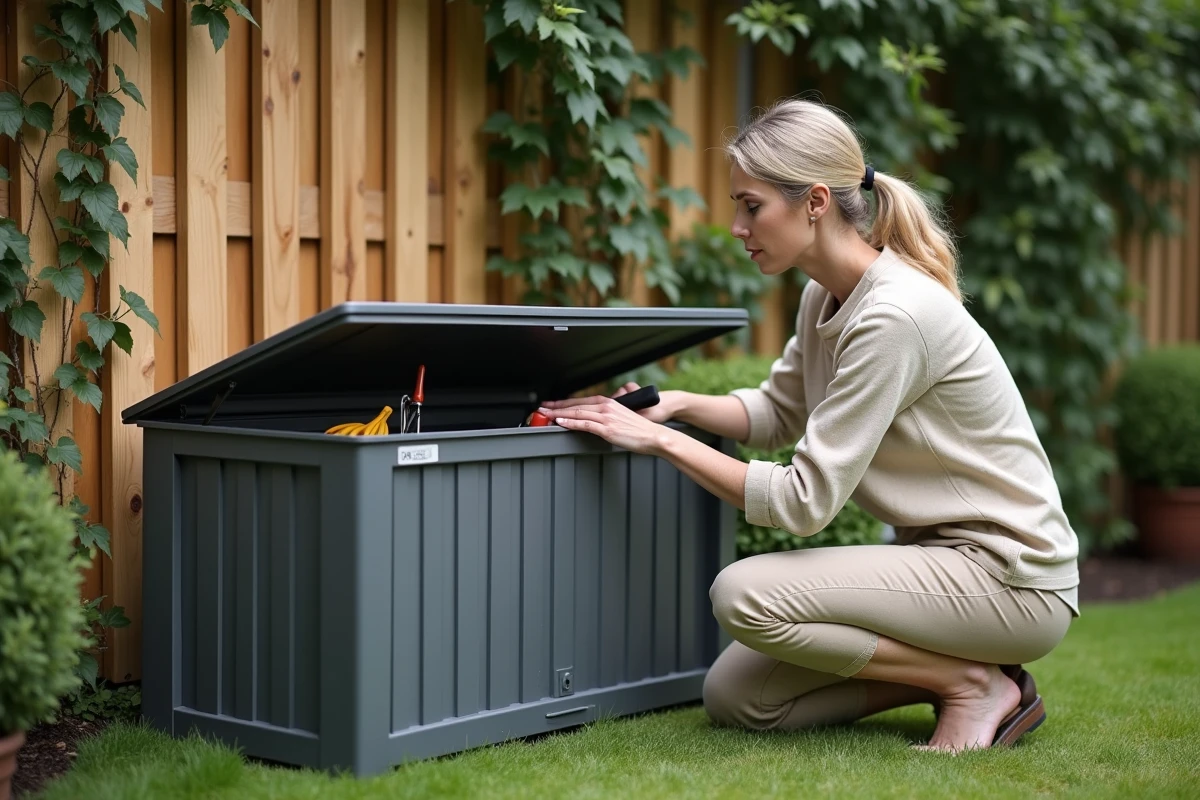
A weather-resistant box protects against direct rain, but not necessarily against stagnant moisture or condensation. A waterproof box, on the other hand, includes lid seals and a raised or ventilated bottom that prevents water from entering, including through capillarity.
For garden lounge cushions or pool textiles, this difference changes everything. A cushion stored in a box simply labeled “weather-resistant” during a week of continuous rain can develop mold. A box with a sealing gasket and passive ventilation system keeps the interior dry.
- Check for the presence of a perimeter seal on the lid, not just a simple fitting
- Prefer models with a slightly raised or ventilated bottom, which prevent moisture from rising through the ground
- Test the opening of the gas spring or piston: a lid that stays open by itself facilitates drying after rain
Real waterproofing depends as much on the design of the bottom as on the lid. A box with a perfectly sealed lid but placed directly on a damp slab will eventually accumulate condensation from below.
Garden bench box: the hybrid segment that changes the balance
Boxes that also serve as extra benches represent a growing segment, particularly among garden retailers and specialized comparators. This hybrid format alters the selection criteria.
A classic box is chosen based on its capacity and resistance. A bench box must also support the weight of two to three adults sitting, which imposes additional structural constraints: side reinforcements, flat and rigid lid, sturdier hinges.
The usable capacity of a bench box is generally less than that of a standard box of equivalent dimensions, because the flat lid and internal reinforcements reduce the interior volume. For storing bulky cushions, a classic box with a domed lid offers more space.
Conversely, on a balcony or small terrace, the bench box saves an additional seating piece along with storage. It is the most relevant option when floor space is the main constraint.
Storage box for balcony and small terrace: specific constraints
Buying guides treat the garden box as a piece of furniture for large green spaces. Small urban outdoor areas pose different problems.
On a balcony, the weight of the loaded box comes into play. A solid wood box filled with tools can reach a significant load, to be compared to the load-bearing capacity of the balcony (indicated in the co-ownership regulations or the building’s technical documents). Lightweight resin or aluminum are often more suitable.
- Measure the usable depth of the balcony by removing the circulation space: a box over 60 cm deep often blocks passage
- Check that the lid can open fully without hitting the railing or a wall
- Models with front-opening (drawer-type) avoid the problem of a lid that requires vertical clearance
On a balcony, the depth of the box matters more than its length. A long and shallow model leans against the wall without reducing living space.
Storing barbecue or plancha accessories, rarely mentioned in comparisons, is nevertheless a common use on urban terraces. Tongs, grills, and plancha covers accumulate quickly and do not withstand moisture well if left exposed. A small waterproof box placed near the cooking area solves this problem without requiring an additional piece of furniture.
The choice of an outdoor storage box depends less on the material taken in isolation than on the combination of available space, the type of items to be stored, and the actual level of waterproofing of the model. In a large garden, molded resin offers the best practicality-maintenance ratio. On a balcony, the bench box format in lightweight resin or aluminum frees up living space. The lid seal and bottom ventilation remain the two technical points to check before purchase.