
Less than half of adults meet physical activity recommendations. This observation is not new, but the benchmarks are evolving. With the national campaign “September Move” launched in 2026 as part of the National Sport-Health Strategy 2025-2030, the official message has shifted: every movement counts, including those that don’t resemble a workout session.
Incorporating sport into daily life does not solely rely on willpower. The barriers are documented, as are the solutions, but their effectiveness largely depends on each individual’s life context.
Sedentary Work: The New Guidelines from Anses
The advice to “get up every hour” has long served as a reference. An expertise from Anses published in 2025 refines this guideline: breaking sedentary behavior every 30 minutes provides measurable benefits, provided that light to moderate walking sessions of 3 to 5 minutes are interspersed.
This recalibration changes the game for office jobs or remote work. Three minutes of walking every half hour amounts to about forty minutes of accumulated activity over an eight-hour day, without having put on sports shoes.
For those seeking concrete ideas tailored to their situation, the website sportandform.fr dedicated to sport offers resources organized by type of practice and level.
However, these micro-breaks do not replace moderate to high-intensity activity. They reduce the harmful effects of prolonged sitting, but are not sufficient to meet weekly recommendations. The two approaches complement each other.
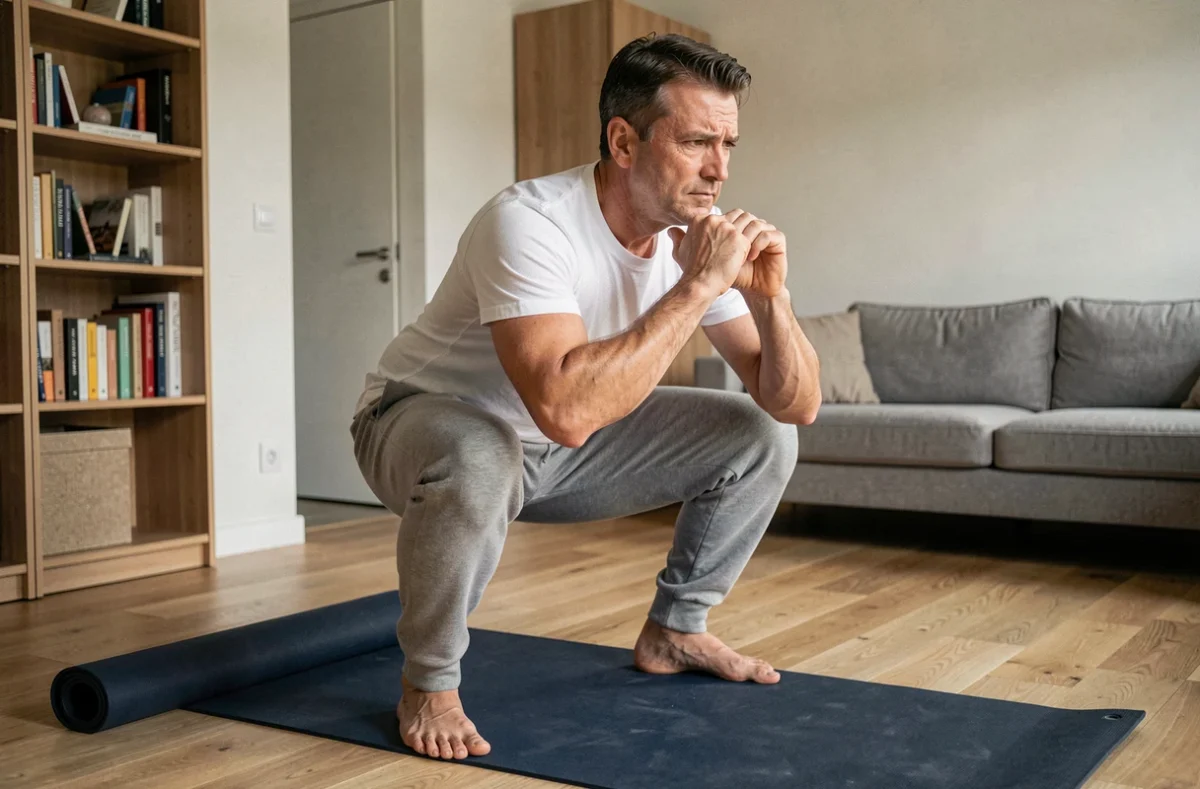
Prescribed Adapted Physical Activity: A Real Framework, Limited Access
Since 2023, prescribed adapted physical activity (APA) is no longer limited to long-term conditions or chronic diseases. People who are overweight or obese can now benefit from it, with a medical prescription.
The program is supervised by trained professionals, distinguishing it from generic advice. An APA educator creates a program based on the patient’s actual capabilities, joint or cardiovascular constraints.
The main barrier remains financial. Health insurance does not directly cover APA, which limits its accessibility. Some mutual insurance companies offer packages, and a few local authorities subsidize slots, but coverage remains uneven across the territory. Feedback from the field varies on this point: in some cities, the offer is structured and accessible, while in others, it is almost non-existent.
Who Does APA Really Change the Practice For?
APA is particularly relevant for individuals for whom resuming activity independently poses a risk or generates apprehension. Resuming activity after a long period of inactivity, with a chronic condition, is not the same as “finding motivation.”
The medical prescription also plays a psychological role. It legitimizes the approach and provides a structured framework, with regular appointments, follow-ups, and progressive goals.
Micro-Sessions and Regularity: What Research Confirms and Nuances
The principle “every movement counts,” promoted by the September Move campaign, is based on solid data. Regularity takes precedence over intensity for most health indicators. A few minutes of daily activity are better than a long weekly session followed by six days of inactivity.
This approach has a practical advantage: it adapts to fragmented schedules. Climbing stairs, walking for short trips, doing some mobility exercises in the morning—all of this can be integrated without requiring a dedicated time block.
- Prioritize active transportation (walking, biking) for trips under two kilometers, including for errands or home-school commutes.
- Interject movement breaks every 30 minutes while seated, in accordance with Anses guidelines.
- Associate activity with a moment already embedded in the routine (lunch break, returning from work) to reduce decision-making effort.
- Vary the types of exercise (cardio, strength, flexibility) throughout the week rather than repeating the same session.

The Limits of “Everything in Micro-Doses”
The available data do not allow us to conclude that scattered micro-sessions produce the same effects as structured training in terms of cardiovascular or muscular benefits. For a goal of sports progression (endurance, strength, aerobic capacity), sessions of 20 to 30 minutes remain necessary.
The “everything counts” discourse may also create a satisfaction bias. Counting housework or errands as physical activity is not inaccurate, but it can lead to overestimating one’s actual level of activity.
Everyday Sport and Time Constraints: Prioritize Rather Than Accumulate
Most content on the subject lists tips to pile on. The reality of schedules rather requires making choices. Adding a workout to an already packed day generates additional stress, which can negate some of the expected benefits.
A more realistic approach is to identify one or two existing habits to modify rather than creating new ones. Replacing a car trip with a bike ride does not require extra time. Transforming a coffee break into a walking break does not either.
The goal is not to fit sports everywhere but to increase overall energy expenditure without disrupting the rest. For people with children, shift work, or irregular hours, standardized solutions (“get up 30 minutes earlier”) do not last long.
The framework established by the National Sport-Health Strategy 2025-2030 recognizes this complexity. The public health challenge is not to turn every French citizen into an athlete but to reduce the time spent in a static position and increase the frequency of movements throughout the day, regardless of their format.