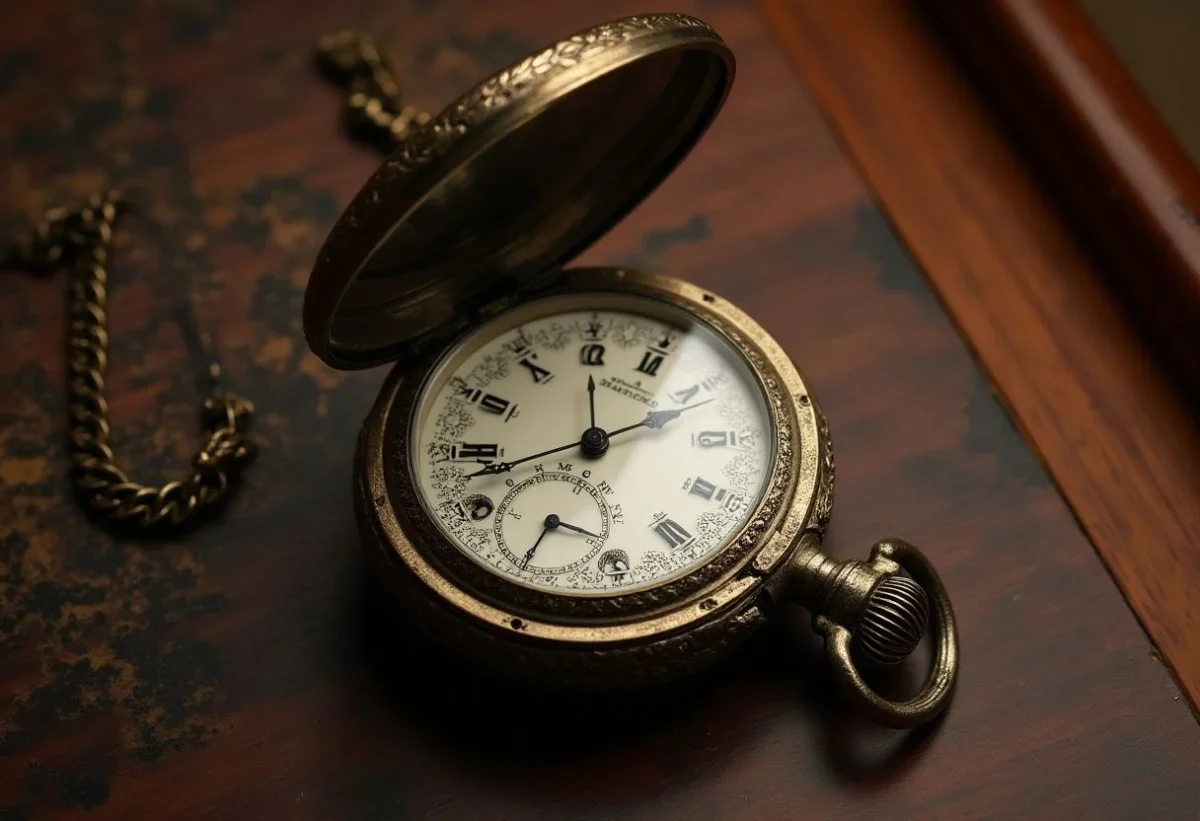
Watchmaking has always been fascinating, and among its most emblematic creations, the pocket watch holds a special place. This pocket accessory, often regarded as a symbol of refinement and elegance, has evolved over the centuries and continues to entice enthusiasts of retro style and sophisticated mechanics. From its beginnings in the 16th century to its role in steampunk fashion, let us explore together the captivating history of the pocket watch.
Origins of the Pocket Watch
Development of Watchmaking in the 13th Century
Long before pocket watches made their appearance, watchmaking was thriving in Europe. By the 13th century, the first mechanical clocks were already in place, marking the beginnings of a long watchmaking tradition. These clocks, often imposing and installed in church towers, laid the groundwork for future innovations. This period allowed for the foundations to be laid for the creation of the first pocket watches.
The First Pocket Watches
It was in the early 16th century that Peter Henlein, a German watchmaker, distinguished himself by creating the first pocket watches. In 1510, he crafted what is often considered the first pocket watch. These early watches, called “pomanders,” were rather rudimentary and worn around the neck. They did not yet have the flattering and compact design we know today. The development of these pocket watches quickly gained popularity, notably thanks to Charles II of England, who introduced them into vests, providing an ideal storage space.
The Evolution of Pocket Watches Over the Centuries
The Shift from Mechanical Movement to Modern Models
The pocket watch has traversed the centuries with notable technical advancements. Initially, the manual-winding mechanical movement was the norm. However, with industrialization and the advent of new technologies, pocket watches saw their mechanisms evolve. Automatic and quartz models emerged, making these accessories even more reliable. Despite the rise of wristwatches during World War I, the pocket watch retained its charm and prestige among collectors and watch enthusiasts.
Influence of Steampunk Styles and Fashion
In the modern world, the pocket watch has found new life thanks to the steampunk style. This aesthetic movement, which blends Victorian elements and science fiction, has embraced the pocket watch as a preferred accessory. Steampunk designs often feature visible gears and open dials, showcasing the complex mechanics of skeleton pocket watches. These unique models continue to attract those who wish to stand out with a style that is both retro and futuristic.
Features of Pocket Watches
The Dials and Watch Chains
Pocket watches are distinguished by the variety of their dials and chains. Traditionally equipped with large gold or silver hands, they can also sport dials adorned with precious stones to add a touch of luxury. Chains, although less commonly used than straps, sometimes allow the watch to be attached to a pocket watch chain or bag, thus offering flexibility in use and style.
The Prices of Pocket Watches Throughout History
The value of pocket watches has always varied depending on the materials used and the technologies implemented. Historically, gold and silver models were reserved for the elite, while options in stainless steel or nickel offered a more affordable alternative. Today, antique pocket watches can reach high prices, while modern and steampunk models are available at accessible rates. The key to evaluating a pocket watch lies in its condition, movement, and provenance.
The Pocket Watch in Popular Culture
Pocket Watches and Symbolism for Men
Wearing a men’s pocket watch goes beyond the simple necessity of knowing the time. It is a style statement, a tribute to an era where fashion and functionality went hand in hand. Pocket watches are often associated with the figure of the gentleman, representing timeless elegance and refinement. They continue to be a prized fashion accessory for special occasions such as weddings or vintage-themed events. If you are looking for this type of accessory, check out modenmarie.
References to Steampunk and Clocks in the Arts
The pocket watch is not just a fashion accessory. It has also found its place in the arts, inspiring writers, filmmakers, and fashion designers. Steampunk cinema and literature often allude to these watches, using their aesthetic to enhance fantastical and retro-futuristic universes. Clocks, as symbols of the passage of time, continue to captivate the imagination, keeping the steampunk pocket watch at the heart of popular culture.
Whether it is its fascinating history, its role in fashion, or its timeless appeal, the pocket watch remains an essential element of watchmaking. As a collectible item or style accessory, it embodies the art of precision and design through the centuries.