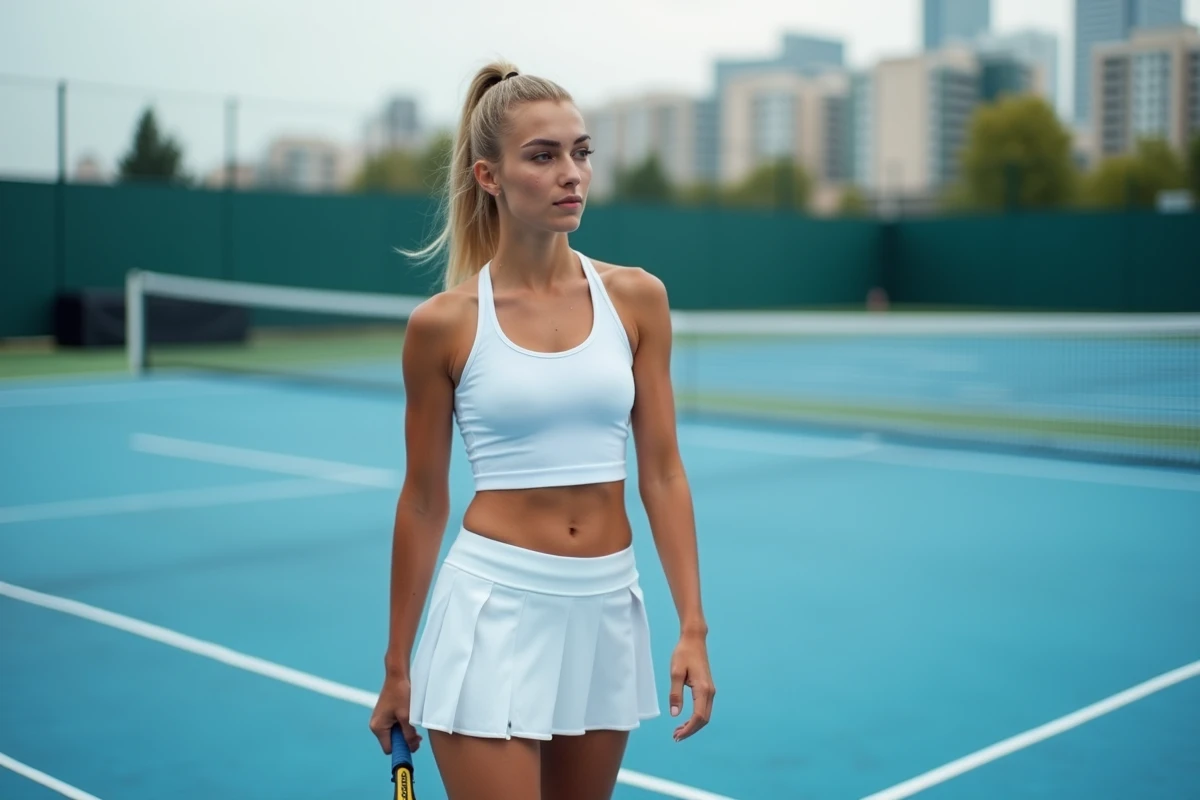
Aryna Sabalenka posts a topless photo on Instagram, and the tennis world ignites. The media headlines about the “buzz,” social networks count the likes, and sports commentators oscillate between admiration and discomfort. The real question lies elsewhere: when a top female athlete chooses to show her body off the court, who really controls the narrative?
Image of female athletes on Instagram: between personal gesture and media product
Have you ever noticed how the same photo can be described in two opposing ways? “Self-assertion” on one side, “provocation” on the other. The framing depends less on the image than on the one commenting on it.
When Aryna Sabalenka’s topless photos circulate online, the world number one is not just posing. She uses her personal account as a space for expression that she controls, outside the framework of press conferences and contractual obligations with her sponsors.
The problem arises at the next stage. Sports media pick up the post with clickbait headlines: “the topless that sparks reactions,” “banned star player got topless.” An athlete’s gesture becomes a viral consumption object within hours. The personal context disappears, replaced by a sensationalist angle.
Instagram functions here as an ambiguous terrain. The athlete posts on her own terms, but the platform amplifies the content according to its algorithmic logic. The control of the image stops at the moment of publication: what follows belongs to feeds, screenshots, and sensational headlines.
Gender double standard in sports: why Sabalenka sparks debate
A male tennis player posts a shirtless photo after a workout. The comments praise his physical shape. No one talks about “provocation” or “topless that sparks reactions.”
This discrepancy has a name: the gender double standard. It does not apply only to tennis. In most disciplines, female athletes are judged on their appearance before their achievements. An athlete who chooses to show her body steps outside the expected framework of the disciplined and “respectable” competitor.
Sabalenka has multiple Grand Slam titles. She has held the world number one position for dozens of weeks. Despite this record, part of the media coverage reduces her to this single Instagram post.
What the reaction of the media reveals
The sites that relay the photo do not analyze it. They show it, crop it, comment on it with emojis and exclamation points. The treatment systematically favors the viral angle.
- Headlines play on the word “topless” as the main hook, relegating the sports status to the background
- Articles never raise the question of consent for redistribution or the context of publication
- The comparison with male athletes in the same situation is absent from the coverage
This pattern repeats every time a high-level athlete publishes personal content deemed “daring.” The media mechanism transforms autonomy into spectacle.
Empowerment or objectification: the boundary that the media refuse to draw
Why does this distinction pose a problem? Because it requires an effort that the “buzz article” format does not allow.
Empowerment implies a clear intention from the athlete, a controlled context, and an audience that receives the message as intended. Objectification occurs when the external gaze isolates the body from any sporting, personal, or artistic context.
In Sabalenka’s case, both coexist. She posts the photo on her own account, with her own staging. It is a deliberate act. However, the media and social media’s take shifts the reading: the body is no longer a personal choice, it becomes an editorial product.
The same image changes meaning depending on who disseminates it and how. It is this ambiguity that most articles refuse to examine, preferring the shortcut of “buzz.”
The role of platforms in this confusion
Instagram moderates content according to its own rules, which apply differently depending on gender. A bare male torso triggers no alerts. A female torso, even partially covered, can be flagged or removed.
The moderation rules reproduce the double standard they claim to ignore. A female athlete posting a topless photo navigates a system where her body is both permitted and monitored, celebrated and potentially censored.
This tension between visibility and control does not only concern Sabalenka. It affects all athletes who use social media as a space for personal expression alongside their competitive careers.
Freedom of female athletes and image control: what remains to be changed
The debate around this topless photo should not focus on the photo itself. It should focus on the system surrounding it.
- Sports media could cover these posts without reducing them to viral content, placing them back in the athlete’s journey
- Platforms could apply identical moderation rules regardless of gender
- The public could distinguish an athlete’s choice from how that choice is repackaged by algorithms and editorial teams
Sabalenka does not need to be defended or judged. She manages her career, her image, and her networks with a strategy that belongs to her. The problem does not come from the athlete, but from the media machine that appropriates every personal gesture.
As long as the coverage of a topless athlete generates more clicks than an analysis of her two-handed backhand, the freedom of female athletes will remain more of a headline topic than a reality.