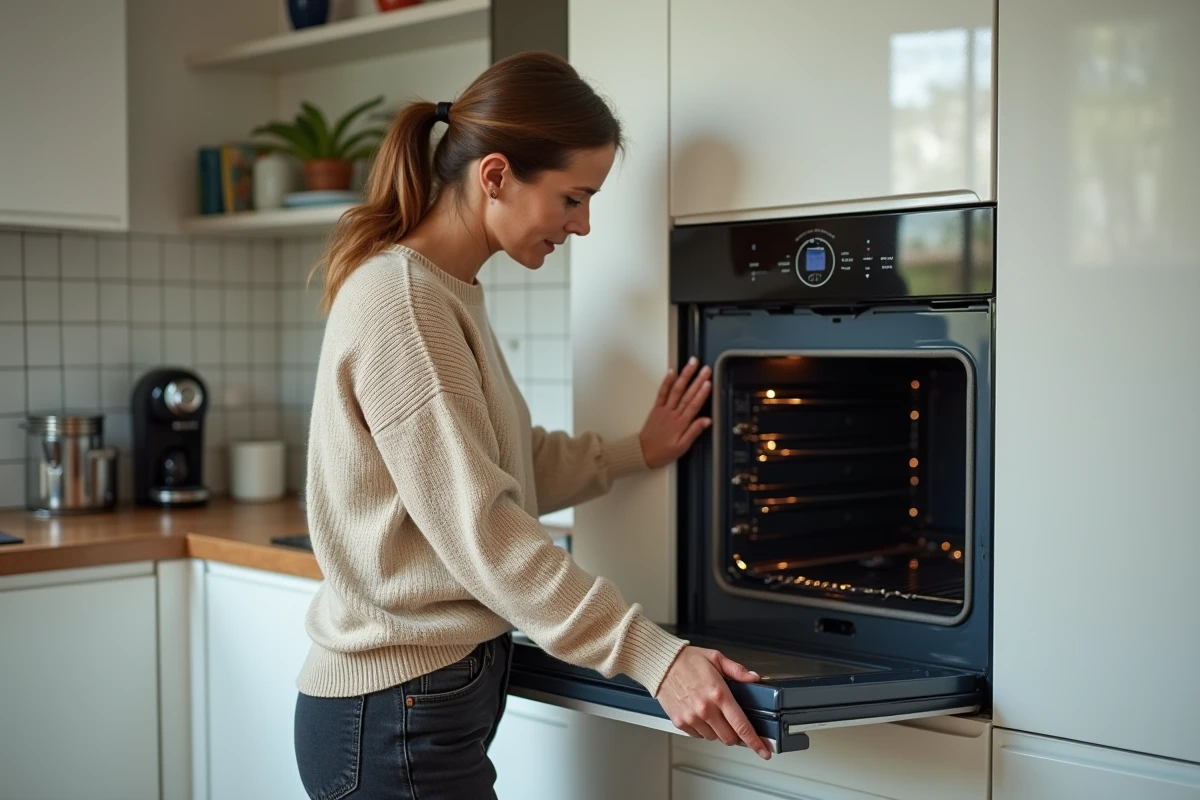
Decree No. 87-712 of August 26, 1987 remains the pivotal text for determining rental obligations regarding appliances. However, since Decree No. 2025-347 of April 15, 2025, the framework has changed: the landlord must now replace the items listed in the inventory with models of minimum energy class A in case of normal wear, under penalty of a fine. The oven, whether built-in or freestanding, is not exempt from this logic.
Decree 2025-347 and the obligation for energy-efficient oven replacement
Before April 2025, the owner was required to provide decent housing with functioning equipment. The new decree adds a specific constraint: the equipment replaced due to obsolescence must reach at least class A. We observe that this requirement directly targets older ovens, often classified as B or C, which are still present in a large part of the rental stock.
Specifically, if the oven fails after several years of normal use and the appliance was listed in the initial inventory, the landlord can no longer install a basic model without checking its energy label. The fine provided by the text penalizes non-compliance with this obligation. To better understand the practical implications of oven replacement in rental, it is essential to clearly distinguish between the oven mentioned in the lease and the one brought by the tenant.
An oven purchased by the tenant themselves, not listed in the inventory of the furnished accommodation or in the initial inventory, remains their sole responsibility, including for replacement. Decree 2025-347 only covers equipment provided by the landlord.

Oven obsolescence versus misuse: the technical dividing line
The distinction between normal wear and lack of maintenance determines who pays. This is the main point of friction between tenants and owners, and the source of most referrals to the conciliation commission.
What falls under obsolescence
An oven whose heating element fails after eight years of regular operation, a thermostat that gradually drifts, a door whose seal deteriorates: all of this falls under normal wear. The owner is responsible for repair or replacement.
The 1987 decree lists rental repairs (routine maintenance). Replacing a complete appliance is not included. When repair is no longer sufficient, the replacement is the landlord’s responsibility if the appliance was provided with the housing.
What falls under tenant fault
- An oven damaged by cleaning with abrasive products that destroyed the interior coating: the tenant has failed in their routine maintenance obligation.
- A door glass broken by impact: damage attributable to the occupant, repair at their expense.
- Extreme soiling of burners or the cavity causing an electrical failure: lack of regular maintenance engages the tenant’s responsibility.
Proof remains the crux of the dispute. The initial inventory, dated and detailed, constitutes the key document. Without a precise description of the oven’s condition at the start, the tenant finds themselves at a disadvantage if the landlord contests obsolescence.
Furnished rental versus unfurnished rental: two different regimes for the oven
In furnished rentals, the oven is part of the list of mandatory equipment set by Decree No. 2015-981. The landlord must provide a functioning oven or microwave. If the appliance breaks down due to wear, the replacement is their responsibility, plain and simple.
In unfurnished rentals, the situation entirely depends on what is stated in the lease and the inventory. If the owner has installed a built-in oven and mentioned it as part of the housing equipment, they remain responsible. If the property was rented without an oven and the tenant installed their own, the landlord has no obligation.
We recommend systematically checking three documents before engaging in any discussion:
- The lease, to identify if the oven is listed among the provided equipment.
- The initial inventory, to establish the initial condition of the appliance (brand, model, noted working condition).
- Any maintenance invoices kept by the tenant, which prove proper use.
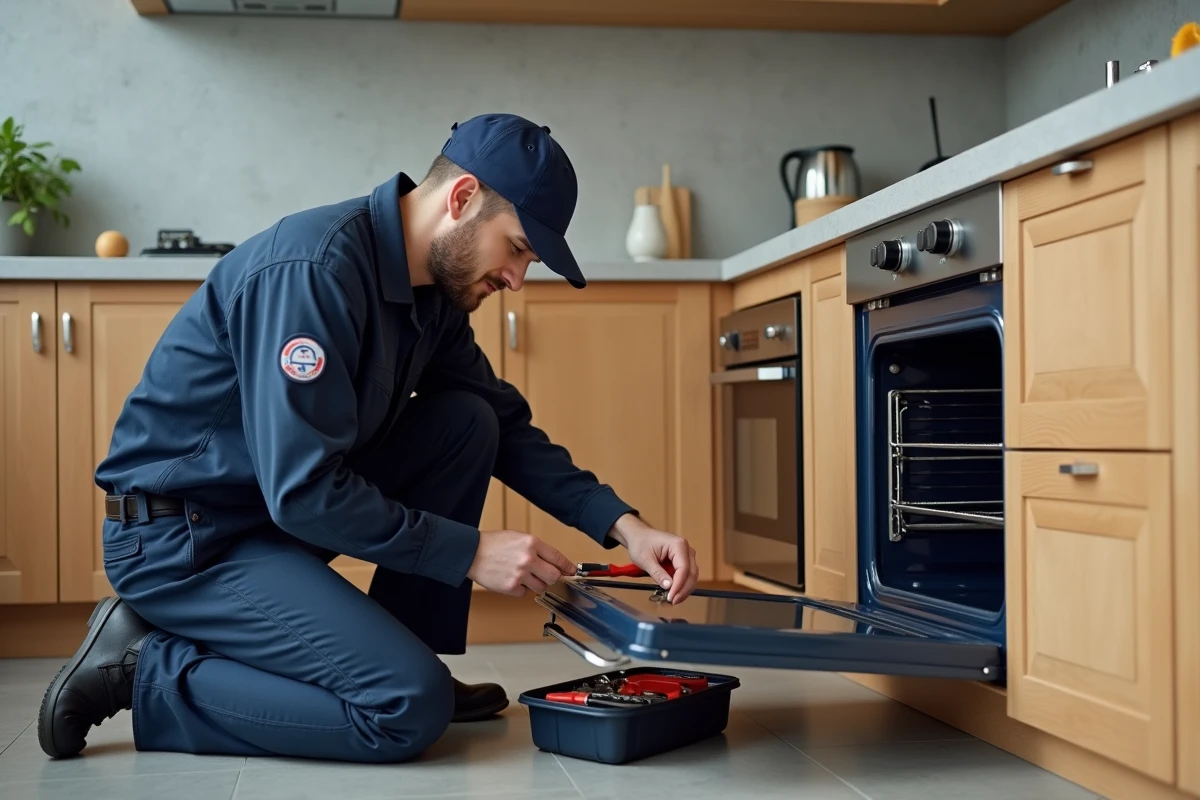
Increase in disputes and recourse to the conciliation commission
Since 2024, departmental conciliation commissions have recorded a notable increase in referrals related to household appliances. The inflation of replacement costs, combined with the accelerated obsolescence of models installed during the post-pandemic period, fuels this trend.
The conciliation commission remains the free recourse before any legal action. It does not render binding decisions, but its opinion carries weight before the judge if the dispute persists. We observe that most cases are resolved at this stage when the documents (inventory, photos, invoices) are complete.
The tenant who notices a breakdown must inform the landlord in writing, ideally by registered letter. A late report may be interpreted as negligence, especially if the breakdown has aggravated other damages (damage to the countertop due to overheating, for example).
Obsolescence grid and cost-sharing for the oven in rental
Some leases include an obsolescence grid, negotiated at signing or attached to the standard contract. This grid sets a percentage of residual value based on the age of the equipment. For an oven, the conventional lifespan generally hovers around ten years in the most common grids.
If the oven is seven years old and the grid provides for linear depreciation, the landlord bears the majority of the replacement cost. The tenant only pays the portion corresponding to the residual value, provided that a maintenance fault is established. Without a grid attached to the lease, it is the judge or the commission that assesses obsolescence on a case-by-case basis, which prolongs timelines and makes the outcome less predictable.
Including an obsolescence grid at the signing of the lease protects both parties. The tenant knows what they risk, and the landlord limits disputes. For a common appliance like the oven, this tool remains underutilized even though it prevents the majority of conflicts.